
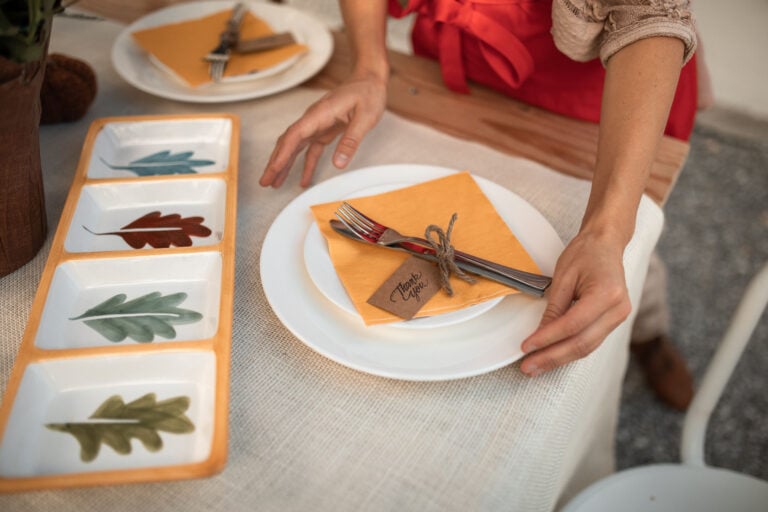
Picture the scene. The turkey took four hours. The pie took a whole afternoon and one minor kitchen emergency. Everyone finally sits down, and before a single fork moves, a small voice asks, “Is there dessert?”
Of course there is. There’s always dessert. That’s the problem.
Here’s something that might take the pressure off: when kids skip right past the thank-you, it usually isn’t a character flaw. It’s a visibility problem. Food shows up on the table. Toys show up in boxes. Money lives inside a card or a phone. From a child’s point of view, most of the good things in life simply appear.
Gratitude grows when kids can see what’s behind those things. The farmer. The truck driver. The person stocking the shelves at 6 a.m. The parent who worked a shift to pay for all of it.
Helping kids see the people and work behind the things they have can turn gratitude from an abstract idea into something they understand and appreciate.
Why Gratitude and Money Belong in the Same Conversation
Most of us teach “thank you” early. It’s one of the first phrases kids learn, right up there with “more” and “mine.”
But saying thank you and feeling grateful aren’t the same thing.
Researchers with the Raising Grateful Children project at UNC Chapel Hill have spent years studying how families teach gratitude. They found that most parents (85 percent) prompted their kids to say thank you and show good manners. Far fewer reached past manners. Only about half of parents said their children showed gratitude in ways that went beyond a polite “thanks.”
That gap is good news, honestly. It means there’s room to grow, and the next step is simpler than it sounds. The UNC researchers describe gratitude in four parts: what kids notice that they have, how they think about why they have it, how they feel about it, and what they do to show it.
The “think” part is where money lessons fit in. When a child understands that a pumpkin pie started as a seed in a field, then traveled on a truck, then sat on a store shelf, then got baked by someone who spent an afternoon on it, the pie means something different. It’s not just dessert anymore. It’s dozens of people’s work.
There’s another payoff, too. In a 2019 study published in The Journal of Positive Psychology, researchers asked adolescents ages 11 to 17 to keep a gratitude journal for two weeks. Compared with teens who simply logged their daily activities, the gratitude group became less materialistic and donated 60 percent more of their earnings to charity when given real money and the choice to keep it or give it away.
Gratitude, in other words, changes how kids think about money. Not just how they say thanks for it.
What Kids Understand About Where Things Come From (By Age)
Kids won’t all get this at the same level, and that’s fine. Here’s what tends to land at each stage.
Ages 3–5: “Someone made this.”
Young kids think in concrete terms. They can’t picture a supply chain, but they can picture a baker.
- Point to one item at the grocery store and name one person who helped make it. “A farmer grew these apples.”
- Keep it short. One person per item is plenty.
- Model it out loud yourself. “I’m so thankful the bus driver got us here safely.”
Abstract ideas like “the economy” can wait. Right now, you’re planting the idea that things come from people.
Ages 6–8: “Lots of people helped.”
Kids at this age can follow a chain: farm, then market, then store, then table.
- Pick a Thanksgiving food and trace its journey together, from where it started to your table.
- Pick three foods on your Thanksgiving table and list the people who helped bring each one home.
- Introduce simple vocabulary: a good is something you can hold, like bread. A service is work someone does for you, like stocking shelves.
Ages 9–11: “Money stands for someone’s time.”
Older elementary kids are ready to connect money to effort. This is a big leap, and it’s a powerful one.
- Talk openly about how money gets earned. “We work to help support our family because we love our family.”
- Compare a homemade pie with a store-bought one. Which took more time? Which cost more money? Why aren’t those always the same answer?
- Try building a pretend Thanksgiving meal on a $30 budget. It shows quickly that every “yes” means a “no” somewhere else.
Ages 12–14: “Where in the world did this come from?”
Middle schoolers can handle bigger questions about how products are made and who makes them.
- Pick a favorite item (sneakers, a phone case, a snack) and look up where it was made.
- Talk about the people behind it, including workers they’ll never meet.
- Keep the tone curious, not heavy. The goal is awareness, not guilt.
Ages 15–18: “What do I actually value?”
Teens live in a world built to make them want more. They’re also fully capable of noticing that.
- Challenge them to jot down every “I want that” moment for a week, then check which ones still matter a few days later.
- Talk about marketing. Who benefits when they feel like they don’t have enough?
- Invite them to set their own giving goal from money they earn.
Five Gratitude Activities That Show the Work Behind the Purchase
These gratitude activities for kids work at almost any age. Adjust the depth to fit your child.
1. Ask the “Who helped?” question at dinner. Pick one food on the table and name three people who helped get it there. It takes two minutes. It works on a Tuesday just as well as on Thanksgiving. The point is to help kids see that many people worked together before the meal ever reached the table.
2. Write a thank-you note to a stranger. Ask kids to choose one person who helped make something they enjoy possible and write them a short note. Encourage your child to pick someone they’ll never meet: the farmer, the truck driver, the cashier. If you can, deliver a note to someone local, like a grocery worker or a mail carrier. Kids are often surprised by how much a small note means to a grown-up.
3. Take a “where did this come from?” grocery walk. Choose five items in the store and trace each one backward: shelf, truck, warehouse, farm or factory. Younger kids can guess. Older kids can read labels and look things up later.
4. Do the hours-of-work math. For kids 9 and up, figure out how many hours of chores or how many weeks of allowance a favorite item represents. If your child earns through the My First Nest Egg app, they can see this in real time. Suddenly that $40 video game isn’t just a price. It’s eight weekends of feeding the dog.
5. Fill a gratitude jar for things, not just feelings. Each week, everyone in the family drops in a note about one thing they’re thankful for, plus who made it possible. “My warm coat, because Grandma bought it and someone sewed it.” Read them together at the end of the month.
From Thanksgiving to Black Friday: Gratitude Meets the Wish List
Let’s be honest about the calendar. Thanksgiving and Black Friday sit right next to each other.
One day we’re counting our blessings. The next day, the whole country is counting deals.
Kids feel that whiplash, even if they can’t name it. And there’s nothing wrong with shopping on Black Friday. Plenty of families save real money that weekend. The trick is helping kids carry a little of Thursday into Friday.
Start with a “have and love” list. Before your child writes a holiday wish list, have them write a short list of things they already own and love. Three to five items is enough. It’s a gentle reset, not a lecture.
Then add one question to the wish list. For each item they want, ask: “Who do you think made this?” or “Who would you thank if you got it?” It slows the list down just enough for them to think.
Separate wants from wishes. A want is something your child might buy with their own money. A wish is something they hope to receive as a gift. Talking about them differently takes the pressure off both. It also connects to the lessons in our Needs vs. Wants guide.
Use a $30 Thanksgiving budget as a practice round. Ask kids to plan a pretend meal within the budget and decide what matters most when they can’t have everything. That’s exactly the skill they’ll need when the wish list is three pages long.
Let them work toward one item. If there’s something your child really wants, consider letting them earn part of it through chores. Kids who work toward a purchase tend to treat it differently once it’s theirs. They know what it cost, because they paid some of it.
Turning Thankfulness Into Action: Earn, Give, Keep
Gratitude that stays inside a note can fade by Monday. Gratitude that turns into action tends to stick.
Here are three ways to help it stick.
Earn
When kids earn money, they start to understand what it takes to get it. That makes them more aware of the work that goes into everything else, too.
The My First Nest Egg app lets parents assign chores, track earnings, and reward kids for the work they do. Our Chore Puzzles make it a little more fun. A jar and a chore chart on the fridge work, too. The point is simple: effort turns into money, and money turns into things.
Give
The Raising Grateful Children research suggests that doing something with gratitude is part of the full picture. Giving is one of the most natural ways to do that.
- Set aside a small portion of allowance or earnings for someone else.
- Let your child choose where it goes: a food bank, an animal shelter, a toy drive.
- If your family likes hands-on giving, our guide to Stocking Stuffers for Charity has ideas by age group.
Keep
Saving can be a form of gratitude, too. It says, “I’m thankful enough for what I have now that I can wait for what’s next.”
If you use the app, kids can earn parent-paid interest on the money they save. Watching savings grow makes patience feel real.
| Age | What They Can Grasp | Try This | Another Idea |
|---|---|---|---|
| 3-5 | Someone made this | Name one person behind one item | Draw a thank-you picture |
| 6-8 | Many people helped | List three helpers for three foods | Name the helpers behind a meal |
| 9-11 | Money stands for time | Hours-of-work math; $30 meal budget | Plan a meal on a budget |
| 12-14 | Products have global stories | Research where a favorite item was made | Trace where an item came from |
| 15-18 | Values vs. marketing | Track “I want” moments for a week | Discuss values and trade-offs |
Frequently Asked Questions
My child says “thank you” automatically but doesn’t seem to mean it. Is that okay? Totally normal. Polite habits often come first, and real feeling catches up later. Keep the habit going, and add one small “why” question now and then. “What do you think Grandma had to do to get you that?” Over time, the words start to carry more weight.
Isn’t it heavy to talk about workers and supply chains with young kids? It doesn’t have to be. For little ones, it’s as simple as “A farmer grew this.” Save the bigger conversations about labor and fairness for the middle school years, when kids are ready to think them through.
What if another child gets way more for the holidays than mine does? This comes up in a lot of families, and it can sting. Acknowledge the feeling first. Then shift the focus to what your child has and who made it possible. Every family’s budget is different, and there’s no right amount to spend. What kids remember most is usually time together, not the size of the pile.
What’s a gratitude practice that actually works for teenagers? Keep it private and low-key. A short gratitude journal (even a notes app) can work well. Research on adolescents ages 11 to 17 found that two weeks of gratitude journaling made teens less materialistic and more generous with money. Teens also respond well to giving decisions they make themselves.
Should I make my child write thank-you notes? That’s up to you, and families land in different places. If you do, try making it about connection rather than obligation. A quick drawing, a voice memo, or a two-line note to someone they genuinely appreciate can mean more than a stack of forced cards.
Every Meal Has a Story
Gratitude grows when kids can see the work behind what they have. The farmer, the driver, the baker, the parent paying at the register: once those people come into view, “thank you” starts to mean something.
You don’t need a big plan to begin. One question at dinner this month is enough. Who helped make this possible? Ask it on Thanksgiving, ask it again the next Tuesday, and you’ll be surprised how quickly your kids start asking it themselves.
When you’re ready to turn that gratitude into action, the My First Nest Egg app gives kids a place to earn through chores, set aside money to give, log acts of kindness, and watch their savings grow, all with you guiding the way. Created by moms for families, it’s free forever, no strings attached. Get the app here.
Sources
Greater Good Science Center, UC Berkeley. “What Parents Neglect to Teach About Gratitude.” https://greatergood.berkeley.edu/article/item/what_parents_neglect_to_teach_about_gratitude
Raising Grateful Children project, UNC Chapel Hill. https://hussong.web.unc.edu/drrl/rgc/
Chaplin, L. N., Roedder John, D., Rindfleisch, A., & Froh, J. J. (2019). The impact of gratitude on adolescent materialism and generosity. The Journal of Positive Psychology, 14(4), 502–511. Summary: https://news.illinois.edu/paper-fostering-gratitude-reduces-materialism-increases-generosity-in-adolescents/
