
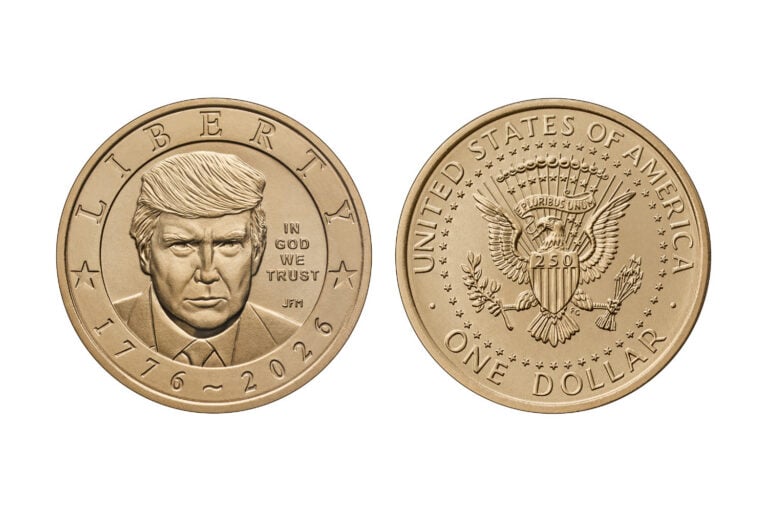
The U.S. Mint has released a special $1 coin featuring President Donald Trump to celebrate America’s 250th birthday. The front features a portrait of the President along with the dates 1776–2026. Flip it over and you’ll find the Presidential Seal and a large 250 marking the anniversary.
Even more unusual? 250,000 of the coins were struck on July 4 with a special “July 4th” mark and mixed into rolls and bags sold by the U.S. Mint.
But how does someone, or something, end up on a U.S. coin in the first place?
Who Picks What Goes on Our Money?
It depends on the coin. Congress can set the rules, while the Treasury and U.S. Mint help turn those rules into actual designs. For America’s 250th birthday, Congress gave the Treasury special permission to redesign coins, and the new $1 coin was created under that authority.
Once the design is approved, it’s time to start making money—literally.
From Metal to Money
Coins start as plain circles of metal called blanks, punched from huge coils almost like cookies from dough. One machine can punch out 14,000 blanks a minute. That’s more than 230 every second!
The blanks are heated, cleaned and given raised rims before heading to a coin press, where powerful dies stamp both sides at once. These presses can strike up to 750 coins a minute.
Finished coins are inspected, counted and packaged before making their way into circulation.
2026 is a great year to check your change. The new dollar featuring President Trump isn’t the only special coin. The dime and half dollar have new designs, and five different quarters are being released for America’s 250th birthday.
So take a closer look at your change. You might be holding a brand-new piece of history.
Click Here for a complementary Money Buzz activity!
